
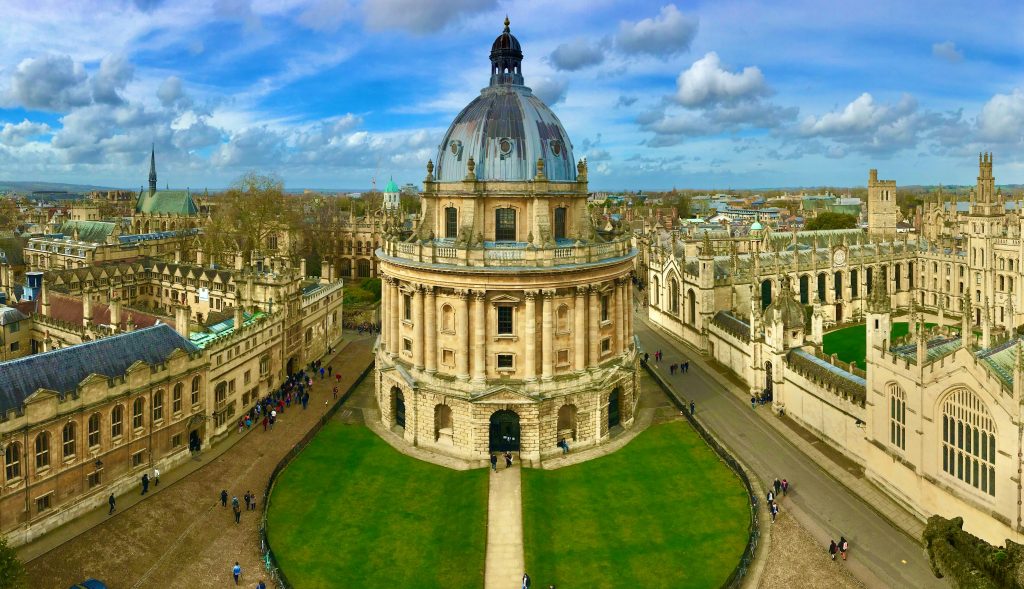
Oxford is one of the higher-value property markets in the UK outside London. The combination of the University of Oxford, a large academic and healthcare sector, constrained housing supply, and strong commuter demand means that prices sit well above the national average and remain high by regional standards. ONS data shows the average house price in Oxford was around £468,000 for mortgage buyers in February 2026 (provisional), with first-time buyers paying around £406,000.
The right area for you depends on your budget, what you need from your surroundings, and how you plan to use the property. This guide covers the main residential areas in and around Oxford, with a focus on what each offers buyers in 2026. It is written from a mortgage perspective: we have included typical price ranges and the kind of property you can expect, so you can start thinking about affordability alongside location.
Price ranges are indicative and based on publicly available sold price data and current listings. Prices vary by property type, condition, and street.
Quick Chooser: Which Area Suits You?
May suit London commuters: City centre and Jericho for Oxford station access; Headington for A40 road access
May suit families: Summertown, Headington, Marston, Wolvercote
May suit academics and university staff: Jericho, North Oxford, Iffley, Wolvercote
May suit those seeking character and community: Jericho, Iffley, Old Marston, Wolvercote
May suit entry-level budgets: Cowley, Blackbird Leys, Rose Hill
May suit new build buyers: Barton Park, Canalside Quarter (Osney Mead)
May suit premium buyers: North Oxford, Boars Hill, Wolvercote, Old Marston
Oxford at a Glance
Oxford is Britain’s oldest university city, with a population of around 162,000 (Census 2021) and a substantially larger urban area when surrounding villages are included. The city’s economy is driven by the University of Oxford, Oxford University Hospitals NHS Foundation Trust (operating the John Radcliffe, Churchill, Nuffield Orthopaedic Centre, and Horton General hospitals), Oxford Brookes University, and a growing technology and science cluster including Oxford Science Park, Harwell Campus, and Milton Park.
Oxford station offers direct services to London Paddington, with journey times varying by service and timetable. The A40 and A34 provide road access to London and the M40, while the A420 connects west towards Swindon.
Oxford’s housing supply is constrained by planning, environmental and physical factors, including Green Belt and flood-risk considerations in parts of the city. This limits the availability of new housing land and supports higher pricing in parts of the city. New development is concentrated in a small number of locations including Barton Park and the Canalside Quarter at Osney Mead.
For more on what you could borrow based on your income and circumstances, see our guide at how much can you borrow.
Area-by-Area Guide
The price ranges below are broad guide ranges only. They are not valuations and should not be relied on when making an offer or assessing affordability. Always seek a professional valuation and independent mortgage advice before proceeding.
Summertown
Typical price range: £550,000 – £1,000,000+ | May suit: Families, professionals, premium buyers
Summertown is one of Oxford’s established higher-value residential areas, located to the north of the city centre along the Banbury Road and Woodstock Road corridors. It is known for its independent shops, restaurants, established school provision, and leafy streets. The housing stock includes large Victorian and Edwardian family homes alongside inter-war semis and some modern development.
Prices in Summertown sit well above the Oxford average. It suits buyers looking for a combination of character, green space, school access, and proximity to the city centre. School catchments can influence demand in parts of Oxford, and boundaries and inspection outcomes can change, so it is worth checking the most up-to-date information before you commit.
Jericho
Typical price range: £500,000 – £950,000+ | May suit: Professionals, academics, character seekers
Jericho is a historic neighbourhood immediately to the north-west of Oxford city centre, built primarily for workers at the Oxford University Press in the 19th century. It has a distinctive character, with terraced Victorian cottages, independent shops along Walton Street, and proximity to the University science area. Much of Jericho falls within a conservation area, which can affect planning permissions for alterations and extensions.
The area often appeals to academics, professionals and buyers who value proximity to the city centre and University. It is one of the more walkable parts of Oxford and popular with those who want to avoid car dependency. Prices have risen steadily and now sit above the Oxford average.
North Oxford
Typical price range: £700,000 – £1,500,000+ | May suit: Premium buyers, academics, families
North Oxford encompasses the large Victorian and Edwardian villas north of the city centre, particularly along the Banbury Road, Woodstock Road, and Park Town. Many properties in this area were originally built for University academics, and there remains a strong connection to the University. The housing stock is predominantly substantial detached and semi-detached period homes, many of which are listed or sit within conservation areas.
North Oxford is at the top end of the Oxford market. Conservation area status and listing can affect what alterations are permitted and may influence lender appetite for some properties. It is worth checking both planning restrictions and lender criteria early if you are considering a listed or conservation area property.
Headington
Typical price range: £400,000 – £700,000 | May suit: Families, NHS staff, academics, Oxford Brookes staff
Headington lies to the east of Oxford city centre and is home to the John Radcliffe Hospital, Churchill Hospital, and Oxford Brookes University. The area has a mix of inter-war and post-war housing, period properties in Old Headington, and some newer development. Demand is supported by proximity to the hospitals and Oxford Brookes, making it popular with NHS staff and healthcare professionals.
Old Headington has a village character with period cottages and higher prices, while New Headington and the areas closer to the hospitals offer a broader range of more affordable family homes. The A40 provides direct road access to London, and regular bus services run into the city centre. Buyers considering properties let to multiple occupants should note that Oxford implemented a city-wide Article 4 direction removing permitted development rights for HMOs in February 2012, which means planning permission is required to convert a dwelling to an HMO.
East Oxford and the Cowley Road
Typical price range: £350,000 – £600,000 | May suit: Professionals, first-time buyers, character seekers
East Oxford, centred on the Cowley Road and extending to areas such as Iffley Road, Florence Park, and Divinity Road, is one of Oxford’s more varied and characterful areas. The housing stock is predominantly Victorian and Edwardian terraces, many of which have been updated to provide modern family homes with period features. The Cowley Road itself is known for its independent shops, cafes, and restaurants.
East Oxford offers a more accessible price point than Jericho or Summertown while retaining strong character and community. It is popular with young professionals and first-time buyers, and has seen sustained demand from buyers relocating from London. Iffley, at the southern end, has a more village-like character and commands a slight premium within the area.
Cowley, Blackbird Leys, and Rose Hill
Typical price range: £280,000 – £430,000 | May suit: First-time buyers, entry budgets, buy-to-let investors
Cowley, Blackbird Leys, and Rose Hill are in the south-east of Oxford and offer some of the city’s more accessible price points. These areas have a mix of post-war housing estates, terraced homes, and some newer development. Cowley retains a connection to its industrial heritage as the home of the Mini production facility at the Cowley plant.
For first-time buyers and investors, this part of Oxford offers the can offer a more realistic entry point into the city’s property market. Rental demand is consistent, supported by proximity to Oxford Brookes University and the Cowley Road corridor. Buy-to-let investors should note the city-wide Article 4 HMO restriction which has been in place since February 2012.
Marston and Old Marston
Typical price range: £450,000 – £750,000 | May suit: Families, those seeking village character and green space
Marston sits to the north-east of Oxford city centre, bordered by the River Cherwell and University Parks. Old Marston has a genuine village identity with a pub, a church, period cottages, and a strong community feel, while New Marston has more typical suburban housing from the mid-20th century. The area has good access to the city centre and the John Radcliffe Hospital.
Marston offers more space and a quieter character than the central suburbs while remaining well connected. It is popular with families and buyers looking for a village feel within the city boundary.
Wolvercote
Typical price range: £500,000 – £850,000 | May suit: Village living, families, academics
Wolvercote is a village to the north of Oxford, just beyond the ring road, with its own identity, a pub on the Thames, and access to Port Meadow. It has a mix of period cottages, inter-war homes, and some modern development. The village is close to the Oxford Canal and offers a rural feel within a short distance of the city centre.
Wolvercote appeals to buyers who want a genuine village setting without sacrificing proximity to Oxford. It is popular with University academics and families, and prices reflect its desirability and constrained supply.
Botley
Typical price range: £380,000 – £620,000 | May suit: Families, commuters, accessible budgets
Botley lies to the west of Oxford city centre, across the Thames from the Osney area. It is a largely residential area with good road access to the A420 and A34, making it practical for those who commute by car as well as those who cycle into the city. The housing stock is a mix of 1960s and 1970s housing and some newer development.
Botley offers a more accessible price point than the central suburbs while providing good access to the city centre, retail at Seacourt Park and Heyford Hill, and the western approaches. It is a practical option for families who want Oxford without the central premium.
Barton Park
Typical price range: £350,000 – £600,000 | May suit: New build buyers, families, modern living
Barton Park is one of Oxford’s significant new residential developments, located to the north-east of the city adjacent to the existing Barton area. The development, delivered primarily by Crest Nicholson, includes a range of house types from two-bedroom homes to larger family properties, with green spaces, a primary school, and community facilities planned as part of the overall scheme.
For buyers looking for new build homes with modern energy efficiency specifications in Oxford, Barton Park is one of the main current options within the city boundary. Development is ongoing. New build purchases may involve developer incentives that need to be disclosed to your lender. Developer incentives can affect how lenders assess the property, so it is worth understanding the position before reserving — see our guide to new build.
Boars Hill
Typical price range: £800,000 – £2,000,000+ | May suit: Premium buyers seeking countryside and privacy
Boars Hill is a residential area on elevated ground to the south-west of Oxford, within the Green Belt. It is known for its large detached properties set in substantial plots, with views across the city and surrounding countryside. The area is predominantly residential with large gardens and a low density of development.
Properties in Boars Hill can sit at a higher price point, reflecting their size, setting and low-density character. Buyers here are typically looking for privacy, space, and countryside access while remaining within driving distance of Oxford. The area is outside the city boundary and buyers should check local planning constraints before making assumptions about development potential.
How to Choose the Right Area
The right area depends on your priorities. Here are some of the factors that tend to matter most to buyers in Oxford.
Commuting. If you commute to London by train, proximity to Oxford station matters. The city centre, Jericho, and Botley are within reasonable distance. For road commuters, Headington offers direct A40 access and Botley suits the A420 and A34 corridors.
Schools. School catchment areas influence both where families choose to buy and, over time, local property prices. Summertown, Headington, and Marston are popular with families partly because of school provision. Ofsted ratings and catchment boundaries can change, so it is worth checking current information before making a decision. Families should check current catchment boundaries, admissions criteria and Ofsted reports directly before relying on school access.
Budget. Cowley, Blackbird Leys, and Rose Hill offer the lowest entry points. Botley, Barton Park, East Oxford, and Headington sit in the middle range. Summertown, Jericho, Wolvercote, and Marston are at the higher end. North Oxford and Boars Hill are at the premium end of the market.
Property type. If you want a period home, Jericho, East Oxford, Summertown and North Oxford often provide a strong supply. For modern estates and new builds, Barton Park is the main current option within the city. Cowley and Blackbird Leys often provide a wider range of more affordable terraced and semi-detached homes.
Lifestyle. Wolvercote, Old Marston, and Boars Hill offer village character. Jericho and East Oxford have the strongest independent high streets. Summertown combines residential quality with good local amenities. Headington is the most practical for NHS and Oxford Brookes staff.
What This Means for Your Mortgage
The area you choose affects your mortgage in several practical ways.
Your deposit requirement depends on the purchase price. A 10% deposit on a £380,000 property in Botley is £38,000. On a £650,000 home in Summertown, it is £65,000. A larger deposit relative to the purchase price (a lower loan-to-value ratio) can give you access to a wider range of products and potentially more competitive rates.
Stamp duty also varies by price. First-time buyers pay no stamp duty on properties up to £300,000, but in Oxford many first-time buyer purchases exceed this level. Home movers pay stamp duty above £125,000. For worked examples at Oxford price points, see our Oxford stamp duty guide.
Some property types can also affect your mortgage options. Listed buildings, conservation area properties, and properties with short leases may face restrictions with certain lenders. In Oxford, where listed and conservation area properties are common in areas such as Jericho, North Oxford, and Old Marston, it is worth checking lender criteria before you offer.
Frequently Asked Questions
What is the best area to buy in Oxford in 2026?
There is no single best area to buy in Oxford. The right choice depends on budget, property type, commute, school needs, lifestyle and how long you expect to own the property. Summertown and Jericho are among the more established higher-value areas. Headington offers a strong supply of family homes with good employment access. East Oxford and Botley provide a more accessible price point with good connections to the city centre. Cowley and Blackbird Leys offer some of the more accessible entry points within Oxford.
Where is the cheapest area to buy in Oxford?
Cowley, Blackbird Leys, and Rose Hill tend to have the lowest average prices within Oxford. Some properties in these areas can be found from around £280,000 to £300,000. For family-sized homes at lower price points, Cowley and Botley offer some of the more accessible options.
Is Oxford a good place to buy property in 2026?
Oxford’s property market is supported by strong employment, the University, constrained housing supply, and good transport links to London. Whether it is the right place for you depends on your circumstances and budget, but the city’s long-term fundamentals remain strong. ONS data shows the average Oxford mortgage buyer price around £468,000 in February 2026 (provisional).
Which areas in Oxford are best for families?
Summertown, Headington, Marston, and Wolvercote are popular with families, with demand often influenced by school catchments and access to green space. Botley and Barton Park may also suit families who want modern housing at a more accessible price point. School catchment boundaries and Ofsted ratings can change, so always check the current position before making a decision based on school access.
Which areas in Oxford are best for first-time buyers?
Cowley, Blackbird Leys, Rose Hill, and Botley offer the most accessible price points. East Oxford may also suit first-time buyers at the lower end of its price range. Many first-time buyer purchases in Oxford will attract some stamp duty, as many purchases exceed the £300,000 nil-rate threshold. For more on the first-time buyer process, see our borrowing guide for Oxford.
What are typical property prices in Oxford by area?
Prices vary significantly by area. As a broad guide based on recent sold price data and current listings, indicative entry points often start from around: Cowley and Blackbird Leys £280,000; Rose Hill £300,000; Botley and Barton Park £350,000; East Oxford £350,000; Headington £400,000; Marston £450,000; Wolvercote £500,000; Jericho £500,000; Summertown £550,000; North Oxford £700,000; Boars Hill £800,000. All figures are indicative and vary by property type, condition, and street.
Which Oxford areas are best for commuting to London?
For train commuters, areas within reasonable distance of Oxford station include Jericho, the city centre and Botley. Oxford station offers direct services to London Paddington, with journey times varying by service and timetable. For road commuters, Headington offers A40 access, while Botley suits the A34 and A420 approach roads.
Next Steps
Once you have an idea of the area and price range that suits you, the next step is to understand what you can borrow and what the total cost of buying will look like. A mortgage broker can help you compare products across the whole market, factoring in your deposit, income, and any specific circumstances.
Visit our Oxford page to book a consultation with our Oxford team or call 01865 577 527.