
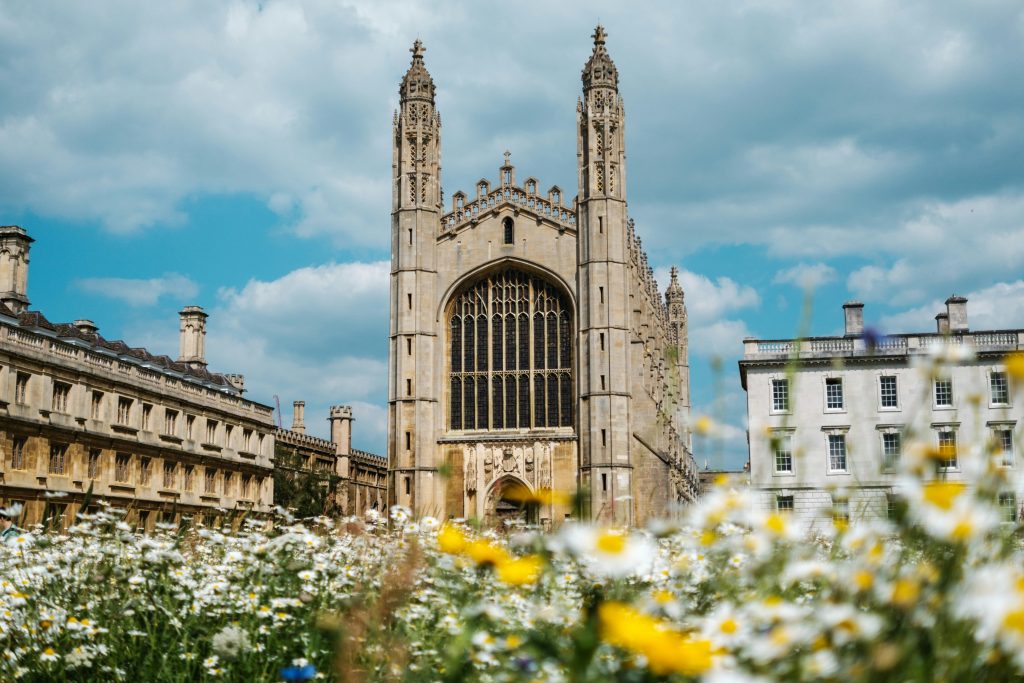
Cambridge is a university city with a global reputation, a growing technology and life sciences sector, and a property market that reflects both. Whether you are relocating for work, moving from London for more space, or looking for somewhere to raise a family, this guide covers the practical information you need to decide whether Cambridge is right for you.
Cambridge at a Glance
Population: around 145,700 (Census 2021)
Fastest train to London King’s Cross: around 49 minutes
Three stations: Cambridge, Cambridge North, and Cambridge South (expected to open June 2026)
Average house price (mortgage buyers): £482,000 (ONS, December 2025, provisional)
Average first-time buyer price: £407,000 (ONS, December 2025, provisional)
Often considered by families: Trumpington, Queen Edith’s, Girton, Histon and Impington
Often considered by London commuters: Petersfield and Romsey (near Cambridge station), Chesterton (near Cambridge North)
Location and Transport
Cambridge sits in south Cambridgeshire, roughly 55 miles north of London. It is well connected by both road and rail, and cycling is a common way to travel.
Train
Cambridge station is on the West Anglia Main Line and offers frequent direct services to London King’s Cross, operated by Great Northern and Thameslink. The fastest direct services take around 49 minutes. Services also run to London Liverpool Street via Greater Anglia, though journey times are longer. Trains run several times an hour throughout the day.
Cambridge North station, which opened in May 2017, serves the northern part of the city with services to London, Ely, and Norwich. It is close to the Cambridge Science Park and the planned North East Cambridge development area.
Cambridge South station is expected to open in June 2026 (Network Rail). It will serve the Cambridge Biomedical Campus directly, with services to London King’s Cross, Brighton, and Stansted Airport. For commuters working on the Biomedical Campus or in the southern part of the city, this is a meaningful addition.
Road
The M11 connects Cambridge to London and Stansted Airport to the south. The A14 links the city to Huntingdon and the A1(M) to the west, and to Bury St Edmunds and the A12 to the east. Traffic congestion on approach roads during peak hours is a well-known feature of Cambridge commuting.
Cycling
Cycling is a common way to travel in Cambridge, helped by a compact layout and established cycle routes. A significant number of residents cycle regularly, and major employers — including the University and the Biomedical Campus — provide cycling infrastructure. If you are relocating to Cambridge, cycling is likely to become part of your daily routine.
Air
London Stansted Airport is often around 30 to 40 minutes by car, traffic dependent, or accessible by rail. It offers a wide range of European and international destinations. London Luton, Heathrow, and Gatwick are also accessible, though journey times are longer.
The Property Market
Cambridge’s property market is one of the more expensive in the UK outside London. ONS data shows the average house price was £482,000 for mortgage buyers in December 2025 (provisional), with first-time buyers paying around £407,000. Both figures sit well above the East of England average.
The market offers a wide range, though at higher price points than many regional cities: flats from around £250,000, family homes in areas such as Trumpington, Chesterton, and Cherry Hinton from around £350,000–£500,000, and larger detached properties in areas like Newnham and Grantchester from £700,000 upwards. New build developments are concentrated in Trumpington, Eddington, and Marleigh.
For a detailed guide to each area, including typical price ranges, see our Cambridge area guide.
Areas and Neighbourhoods: A Quick Overview
Cambridge has a range of residential areas, each with a different character. Here is a brief summary to help you orientate.
Newnham — sought-after residential area west of the city centre. Period homes, tree-lined streets, proximity to the Backs and the University. Higher price point.
Trumpington — south of the city with a mix of older village and newer development. Close to the Biomedical Campus. Growing area popular with families.
Chesterton — north of the river, close to Cambridge North station. Mix of Victorian terraces and modern homes. Popular with commuters.
Queen Edith’s — south-east of the centre, close to Addenbrooke’s. Suburban character, popular with families.
Petersfield and Romsey — between the city centre and Cambridge station. Victorian terraces, Mill Road independent shops. Strong commuter demand.
Cherry Hinton — east of the city. More affordable family housing within the city boundary.
Arbury and Kings Hedges — northern Cambridge. Some of the most affordable property within the city.
Eddington — purpose-built development by the University on the north-western edge. Modern homes, community facilities, car-light design.
Girton — village to the north-west. Village character with city access by bike or car.
Great Shelford — village to the south with its own train station. Higher prices, village living.
Grantchester — premium village south-west of the city. Character property, countryside setting.
For a full breakdown with typical price ranges, see our Cambridge area guide.
Schools and Education
Cambridge has a broad range of schools at both primary and secondary level. The city does not have grammar schools within its boundary, though there are selective independent schools. School catchment areas can influence property demand in parts of Cambridge. Ofsted ratings and catchment boundaries can change, so it is worth checking the most up-to-date information before making a decision based on school catchment.
The University of Cambridge is a major presence, with around 24,900 students (2024–25) and a large academic and support workforce. Its influence on the city extends well beyond education — it is one of the largest employers in the area and shapes the character of many residential neighbourhoods.
Lifestyle, Culture, and Things to Do
Cambridge has a cultural offering that extends well beyond the University. The Fitzwilliam Museum is one of the leading art and antiquities museums in the UK, with free admission. The city also has the Cambridge Arts Theatre, the ADC Theatre (the oldest university playhouse in the country), and the Corn Exchange, which hosts live music and events.
The River Cam and its surrounding green spaces are a defining feature of the city. Punting, walking along the Backs, and cycling to Grantchester Meadows are part of daily life for many residents. Jesus Green, Midsummer Common, and Parker’s Piece provide open space within the city centre.
The city has a strong independent food and drink scene, with Mill Road particularly well known for its independent restaurants, cafes, and shops. There is a regular market on Market Square. Cambridge also hosts an annual literary festival, science festival, and folk festival.
Employment and the Local Economy
Cambridge’s economy is driven by three main sectors: higher education and research, technology and life sciences, and healthcare. The University of Cambridge and its associated colleges are among the largest employers. The Cambridge Biomedical Campus — home to Addenbrooke’s Hospital, the Royal Papworth Hospital, AstraZeneca, and numerous research institutes — is a major employer and demand driver for housing in the south of the city.
The technology and life sciences cluster, sometimes referred to as “Silicon Fen,” includes thousands of companies ranging from early-stage startups to established multinationals. Major employers in the area include ARM, AstraZeneca, and Darktrace, alongside a large number of smaller firms. The Cambridge Science Park and St John’s Innovation Centre are key locations for this sector.
For those who work remotely or commute to London, Cambridge can be lower cost than London for many households, although housing remains expensive by UK standards. Many relocators cite this combination of employment opportunity and London access as a key reason for moving.
Cost of Living
Cambridge is more expensive than much of the UK, though less expensive than London. Property prices are the most significant difference — the average house price of £482,000 for mortgage buyers is well above the national average. ONS data shows average private rents reached £1,797 per month in January 2026 (source: ONS Price Index of Private Rents, Cambridge local authority), higher than the East of England average of £1,268.
Day-to-day living costs — groceries, eating out, gym memberships, and local transport — are broadly in line with or slightly above national averages. The main additional cost for London commuters is the rail season ticket, which should be factored into any comparison with London living costs. Against this, Cambridge’s cycling infrastructure means that many residents manage without a car, which can offset transport costs.
Regeneration and Development
Cambridge is undergoing significant investment. Key projects include Cambridge South station (expected to open June 2026, serving the Biomedical Campus), the North East Cambridge development area (a major planned regeneration zone near Cambridge North station, though government funding for enabling works was withdrawn in August 2025, source: Greater Cambridge Shared Planning), the continued expansion of the Cambridge Biomedical Campus, and the University’s Eddington development on the north-western edge of the city.
The city was not awarded city status recently — it has held city status since 1951.
Getting a Mortgage When Relocating to Cambridge
If you are moving to Cambridge from another part of the country, the mortgage process works the same as any purchase — but there are a few things that relocators often need to think about.
Selling and buying simultaneously. If you are selling a property elsewhere, the timing of the chain can be a significant factor. Some buyers use bridging finance to secure a property before their sale completes, though this comes with additional cost and risk.
Affordability. If your income is changing as part of the relocation — for example, moving from a London salary to a local role, or starting a new job — some lenders require you to have been in your new role for a minimum period before they will lend. Others are more flexible. A mortgage broker can help you navigate this.
First-time buyers. If you are buying for the first time, Cambridge’s average first-time buyer price of around £407,000 means most purchases will attract some stamp duty, as this exceeds the £300,000 nil-rate threshold for eligible first-time buyers. For worked examples at Cambridge price points, see our Cambridge stamp duty guide.
Stamp duty. The stamp duty you pay depends on your circumstances — whether you are a first-time buyer, a home mover, or buying an additional property. For worked examples, see our stamp duty guide for Cambridge.
Frequently Asked Questions
Is Cambridge a good place to live?
Cambridge offers a combination of history, green space, strong employment, and good transport links. Whether it is right for you depends on your priorities, budget, and where you are moving from. Property prices are higher than in many regional cities, which is the main trade-off.
What is the nicest area of Cambridge?
This depends on what you are looking for. Newnham is one of the most sought-after areas for its character and proximity to the University. Trumpington is popular with families for its newer housing and Biomedical Campus access. Petersfield and Romsey offer a strong independent high street. Grantchester provides a premium village setting. See our full area guide for Cambridge.
How long is the commute from Cambridge to London?
The fastest direct trains from Cambridge to London King’s Cross take around 49 minutes, with frequent services throughout the day. Services also run to London Liverpool Street, though journey times are longer. By road, the M11 connects to London, though driving times vary significantly with traffic.
Is Cambridge cheaper than London?
Yes, though Cambridge is more expensive than many other UK cities. Average property prices are around £482,000 for mortgage buyers, compared with well over £500,000 in London. Rents, day-to-day costs, and council tax are also generally lower than London. The main additional cost for commuters is the rail season ticket.
What are the pros and cons of living in Cambridge?
Advantages include strong employment in technology, research, and healthcare; good transport links to London; a compact, cycleable city; a strong cultural and food scene; and extensive green space. Disadvantages can include high property prices, traffic congestion on approach roads, limited parking in the city centre, and the cost of commuting to London by rail. The balance depends on your circumstances and what you are comparing it to.
What is there to do in Cambridge?
Cambridge has the Fitzwilliam Museum, the Cambridge Arts Theatre, the ADC Theatre, the Corn Exchange, punting on the Cam, extensive green spaces including Jesus Green and Midsummer Common, and a strong independent food and drink scene centred on Mill Road and the city centre. The Gog Magog Hills and the Cambridgeshire countryside are within easy reach for walking and cycling.
Next Steps
If you are moving to Cambridge, the practical next step is to confirm affordability and timing before you offer on a property. We can review your position and outline the documentation needed to proceed.
For guidance on choosing a broker, see our guide to mortgage brokers in Cambridge.
Visit our Cambridge page to book a consultation, or call 01223 655 579.